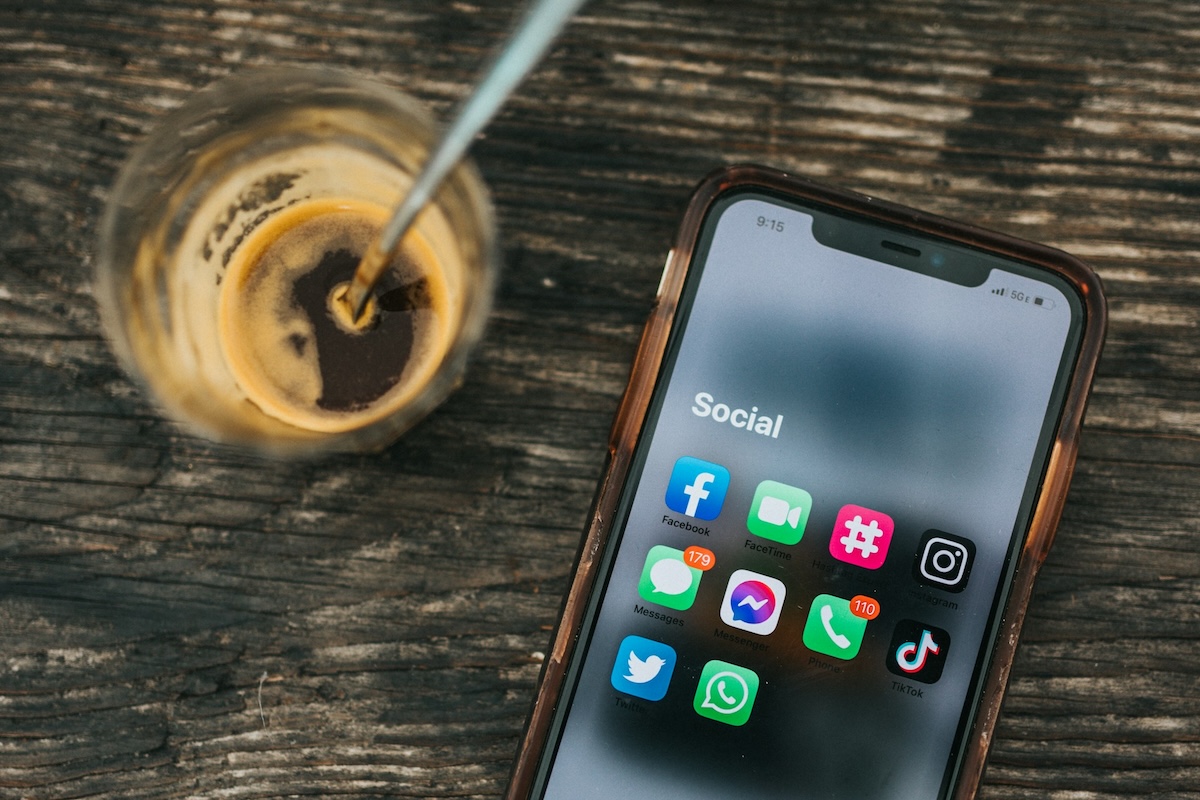

My latest smartphone report shows 16 minutes of average daily screen time. Sometimes it goes up to 30 minutes. The point is that I try to limit distractions as much as possible, but last year I took it up a notch as a part of a personal challenge.
What did I do? For a few months, I swapped my smartphone for a dumbphone, not a fancy one that you can buy these days but a real plastic “brick,” which doesn’t have internet access and packs only the essentials like calling, texting, and listening to local radio stations.
That was me. You, however, don’t have to go to such extremes to improve your mental health. In this article, you’ll learn about seven digital minimalism trends that don’t strip you of basic everyday conveniences but encourage an intentional use of your attention and your technology.
1. Dumbphones Are the New Smartphones
I remember how excited people were when Apple released the first iPhone. But I guess it’s true that you can have too much of a good thing. It’s one of the reasons why digital detox apps are so popular: we’ve become so addicted to our devices that we need something to enforce healthy boundaries.
So now we see dumbphones making a comeback. Recent data shows that 28% of Gen Z adults and 26% of millennials are interested in devices lacking advanced digital capabilities. And the market responds. You can now buy Light Phone III or Mudita Kompakt, a new generation of dumbphones that offer basic functionality but don’t have a browser or social media apps.
You might not be ready to give up your smartphone just yet, but at least you know about the valid alternatives. I’ve read how some people use iPhone for work and Mudita Kompakt for personal needs.
What you can do: turn on Grayscale Mode. Both iOS and Android have this feature. Your smartphone screen goes black-and-white, and suddenly Instagram looks about as appealing as a tax form. You don’t need new hardware to start experiencing the shift.
2. Offline Clubs
In his video titled “How Cell Phones Impact Our Relationships,” Simon Sinek says:
There’s a subconscious reaction to these devices when we use them. What if I were to hold my phone while I was talking to you? I’m not checking it; it’s not buzzing; it’s not beeping. I’m just holding it. Do you feel at this moment that you are the most important thing to me right now? No, you do not. Because there’s a subconscious reaction we have to the device. When it is out, it makes the people around us feel that they are less important.
Enter The Offline Club, a third place reimagined for people who crave genuine connection with others. Their rule is simple: smartphones get checked at the door. What awaits beyond that point ranges from silent reading hours to board game nights but always stays true to their motto: “Swap screen time for real time.”

FREE Self-Test: How Spiritual Are You?
A report from SunnySkyz quotes one of the attendees of The Offline Club:
‘I came to make new friends,’ he shared. ‘People complain that they’re lonely but they’re not willing to go out and make an effort.’ Malijan, who typically spends time online recommending perfumes on “fragrancetok,” believes the overuse of smartphones is contributing to increased introversion and weakened social skills, especially among the younger generation.
What you can do: no need to join an organized club to improve your screen time management. Host a “Phone Foyer” dinner, where you put a basket at your front door. Tell guests it’s a VIP offline zone, and the first person who checks their phone does the dishes. Or buys the next round. Make it playful, but make it real. You’ll be surprised how different the conversation feels when nobody’s half-listening while scrolling under the table.
3. JOMO Travel
What if instead of a two-week vacation, you could take off for two days to recharge under the stars, away from technology and your troubles? That’s one of the new ways people choose to spend their time in 2025 as a part of JOMO, joy of missing out, where disconnection is the main attraction.
And it’s supported by data: The Stayz “Unpack ’25” report found that 62% of travelers believe that JOMO trips reduce stress more effectively than those packed itineraries where you’re sprinting between landmarks.
But how exactly do you do it? Look no further than Unyoked or Postcard Cabins that rent private cabins secluded in nature and market their lack of cell service as a premium feature, not a liability. Among other things, these mini-retreats are essentially phone-free zones that command a premium price for the ability to disconnect.
What you can do: A cabin in the woods is not necessary. Here’s the accessible version of your own digital wellness retreat: the Airplane Mode staycation. Pick one weekend a month. Put your phone in Airplane Mode from Friday night to Sunday morning. Tell close family specifically—so you’re not anxious about emergencies—then disappear into your own home. Read that book. Cook something complicated. Stare at the ceiling if you want. The point is nobody can reach you, and you’re not reaching for anything either.
4. AI as Your “Digital Bouncer”
Our smartphones have the capacity to increase or decrease our productivity. Unintentional use — the one where we compulsively check social media — leads to the latter outcome. That’s why we use so many hacks to combat app notifications:
- Physical separation: Leaving phones in another room while we work or spend time with our loved ones.
- Do Not Disturb Mode: Manually silencing all notifications for deep work.
- “Phone Check” Blocks: Scheduling specific times throughout the day to catch up on the latest news.
- Digital Detox Apps: Using apps like Freedom or Opal to block distractions.
The list goes on and on. But all of these methods take time and sometimes willpower, and we all know that both of these resources are in limited supply.
The latest trend in 2025 is using AI in our never-ending battle to reduce information overload: iOS 18.1 and Android 16 updates introduced a feature called Notification Summaries. It uses on-device artificial intelligence to analyze notification content and only lets through what actually needs immediate attention, like a text about meeting your study partner at a library.
Everything else gets batch-summarized and delivered on your schedule, not the moment it arrives. This is the epitome of intentional technology use, turning your device from a master into a servant.
What you can do: Spend ten minutes un-liking clickbait, muting noisy accounts, unfollowing people who make you feel worse. Then enable Notification Summaries on iOS or Android. Your phone will feel less like a slot machine and more like a tool you actually control. The shift is immediate and honestly a little unsettling at first, which tells you how conditioned we’ve become to constant interruption.
5. Digital “Death Cleaning”
You probably know about 1Password, a browser extension that manages your logins. I’ve just checked mine, and it has more than 100 entries. According to Life File, “the average person under 70 has more than 160 online accounts.” You might have more or less than that amount. The question is, what happens to your digital assets when you’re no longer here?
It’s not a morbid thought but a practical one. I’m reminded of it when I practice mindfulness of death; Swedes are reminded of it when they practice döstädning, or death cleaning. In 2025, this practice has jumped from physical closets to hard drives.
Digital estate planning services are growing, helping people create “throw-away boxes” for digital files, folders specifically labeled to be deleted unread upon death. It sounds dark until you realize that achieving this level of organization directly contributes to greater mental clarity. It’s essential for reducing digital clutter and freeing up cognitive space.
What you can do: the One Year Rule. Open your Downloads folder right now and sort by date. Delete everything older than twelve months. If you haven’t opened it in a year, you won’t. It’s digital clutter taking up space and mental energy. You’ll delete hundreds of files in minutes, and your computer—and your brain—will both feel lighter immediately.
Related article: “What Is Mindfulness of Death in Buddhism?”
6. The “Right to Disconnect” Goes Corporate
The line between work and personal time used to be blurry. In 2025, it’s becoming a hard boundary backed by law and corporate policy. “Grind culture” is out. Actually clocking out, and staying clocked out, is in. This isn’t just employee preference anymore. It’s becoming a legal right, addressing the severe issue of tech burnout among the modern workforce.
Spain has reinforced legal protections around disconnection, making after-hours contact from employers not just frowned upon but prohibited. Other countries are following suit. The technology that used to enable overwork is now being used to enforce boundaries.
Corporate wellness programs are catching up. They’re including “Digital Disconnection” modules as standard practice. Email signatures that read “I am sending this at a time that works for me; I do not expect a response outside your working hours” have shifted from apologetic to professional etiquette. Establishing social media boundaries and other communication protocols signals respect, not weakness.
What you can do: you can implement this without waiting for your company to mandate it. Hard-schedule your clock out. Set an alarm on your phone for 6:00 PM labeled “Shutdown.” When it rings, close your laptop, turn off Slack notifications, and physically leave your workspace—even if that workspace is just your dining table. The physical ritual matters. You’re training your brain that work ends at a specific time, and everything after that belongs to you.
7. Sensehacking (Rebooting the Nervous System)
Replacing scrolling to relax with true sensory input is essential because mindful scrolling simply isn’t enough to combat the constant visual stimulation of our digital lives. Sensehacking flips this by replacing screen overstimulation with other sensory inputs: sound, light, vibration. It’s biohacking for relaxation—giving your nervous system what it actually needs instead of what the algorithm wants to feed you.
Your eyes are exhausted. Your brain is fried from constant visual processing. Passive sensory experiences, ones that don’t require you to look at anything, let your nervous system actually reset.
This explains the explosion of sound baths and apps like Endel or Portal that generate adaptive soundscapes designed to shift your brain wave states. You’re not watching anything. You’re not scrolling. You’re just letting the sound create a mental state conducive to deep work. It feels almost too simple, which is probably why it works.
What you can do: Try the Dark Room Reset next time you feel the urge to doomscroll from stress. Go into a dark room or put on an eye mask for ten minutes. Listen to brown noise or a soundscape. There are free apps for this. Depriving your eyes of light rests your brain faster than watching “relaxing” videos on TikTok ever will. Your nervous system needs darkness and stillness, not more pixels. Complement with “Sensehacking: How to Use the Power of Your Senses for a Happier, Healthier Living” by Charles Spence.
Conclusion
So what do these seven trends have in common? It’s about implementing systemic design instead of relying on willpower alone (we all know that it’s in limited supply).
Increasingly holistic corporate policies, AI filters that reduce distractions, and even “dumb” hardware that removes temptation entirely, all function as an antidote to attention economy, where companies compete for your most valuable resource with the sole purpose of selling it to advertisers.
The Right to Disconnect isn’t just a legal concept in Spain anymore. It’s a personal mandate for mental health, and people are claiming it through various ways of observing a digital sabbath.

FREE mindfulness resources for stress relief
The most advanced way to use technology in 2025? Learning when to make it invisible: whether that’s through JOMO travel, death cleaning your digital clutter, or checking your phone at the door of a social club.


I’m a freelance writer and mindfulness advocate behind this blog. I started my meditation practice in 2014, and in 2017 I launched this website to share what I learn with others. Here are the three things you can do here:
1. Schedule a free consult if you want to learn Buddhist meditation.
2. Download free mindfulness resources for stress relief
3. Join Patreon for exclusive content and community meetings.