
“Happiness slips from our grasp as we chase other things.” I was sitting at my kitchen table, holding a cup of coffee, when those words from Thich Nhat Hanh’s book “Transformation and Healing” stopped me cold.
At the time, my evenings followed a familiar ritual: sitting in the glow of my laptop screen, clicking “add to cart” on a leather keychain I didn’t need, hoping that ping of confirmation would finally let me feel less dissatisfied with my life.
What began as a practical way to replace worn-out household items had transformed into something else entirely. Buying had become my preferred way of keeping discomfort at a distance.
It is remarkable how easily this impulse blends into the rhythm of daily life until we can no longer tell when we are meeting a genuine need and when we are simply taking another step toward a destination that keeps moving farther away.
The subtle ways online shopping therapy becomes an endless everyday cycle
This compulsion disguises itself in the mundane rhythms of a Tuesday. It starts with checking a delivery status four times before lunch, or spending an hour comparing two nearly identical shades of charcoal sweaters to convince myself the right color would finally make me look more collected.
The habit feeds on its own momentum. I found myself following the same route—researching an item, placing the order, tracking the shipment, unboxing it at the kitchen counter, and looking for the next thing that might carry me farther toward that feeling of arrival.
The friction comes from the aftermath of that cycle. A nagging fatigue sets in the moment the cardboard boxes are collapsed and carried out to the recycling bin.

FREE Self-Test: How Spiritual Are You?
We tell ourselves we are just adjusting our surroundings or upgrading our wardrobe, but under the surface, this repetitive ritual is another attempt to move closer to a sense of certainty that always seems ahead.
By focusing on the tangible markers of shipping notifications and return windows, we convince ourselves we know where we are going, even as the destination keeps shifting beyond the next purchase.
Why buying new things creates a false sense of control
Acquiring physical objects turns vague anxieties about our direction into manageable, structured actions. When life feels chaotic, researching the exact dimensions of a coffee table or deciding between two shades of oak offers an feeling of knowing which way to turn.
Material accumulation gives us something definite to move toward when our internal world feels unanchored. It is easier to measure progress by what arrives at our doorstep than to face the unpredictable questions of where our lives are actually headed.
The fragility of this protection reveals itself during the smallest disruptions.
I remember refreshing the tracking page for a package I had ordered, expecting to see that it was out for delivery. Instead, the status had not changed in two days. I told myself it was a minor delay, but I kept checking the page between tasks and feeling an irritation rise each time the same message appeared.
By evening, I was disproportionately upset over a box that contained nothing essential. That reaction showed how much emotional stability I had tied to the expectation of reaching the next small destination.
How the thrill of shopping masks a deeper feeling of emotional stagnation
The sequence of online shopping—refreshing a shipping portal to watch a package move between distribution hubs toward my doorstep—creates an illusion of personal growth. Every step makes a mundane week feel like it is building toward something tangible.
This constant acquisition keeps us in an “almost ready to live” mindset. We convince ourselves that once we lay open a heavy-paper journal on an uncluttered desk, we will finally reach the life we want.
But this perceived progress keeps us circling the same ground; we use the mechanics of shopping to avoid facing our current emotional reality.
Over time, this habit settles into a high-functioning numbness. Browsing and buying become the default response to any flash of discomfort.
We become master consumers, able to evaluate products and optimize our gear with precision, yet we remain detached from our actual experiences. Moving from one package to the next ensures we never have to pause long enough to notice where we actually are.
The difference between a perfectly curated life and feeling genuinely alive
It is easy to admire the high-functioning individual who curates an impressive physical environment and balances functional aesthetics with minimalist design. Every shelf displays a chosen ceramic mug, every garment hangs in a neutral palette.
Yet this mastery often places a distance between us and the unpredictable texture of life. Authentic aliveness lives in messy moments, like a kitchen table strewn with flour after making dinner, or an old pair of scuffed shoes worn thin by long walks.
When our environment becomes controlled, life starts feeling like a spectacle happening near us rather than an experience lived through us. We end up spending more time arranging the setting for our lives than actually inhabiting the moment in front of us.
Learning to tell if a purchase supports life or delays living
Shifting away from relentless acquisition can simply be about changing how we relate to the objects we bring into our daily space.
When considering a new item, I have learned to pause and ask myself one straightforward diagnostic question: Is this object creating actual room for me to live, or is it sending me farther down a road of endless preparation?
When a tool supports the focus of a late night spent writing at a cluttered desk without demanding center stage, it fits naturally into my life.
But when a purchase becomes another marker along a route toward some imagined future in which everything will finally feel right, it merely postpones my engagement with reality.
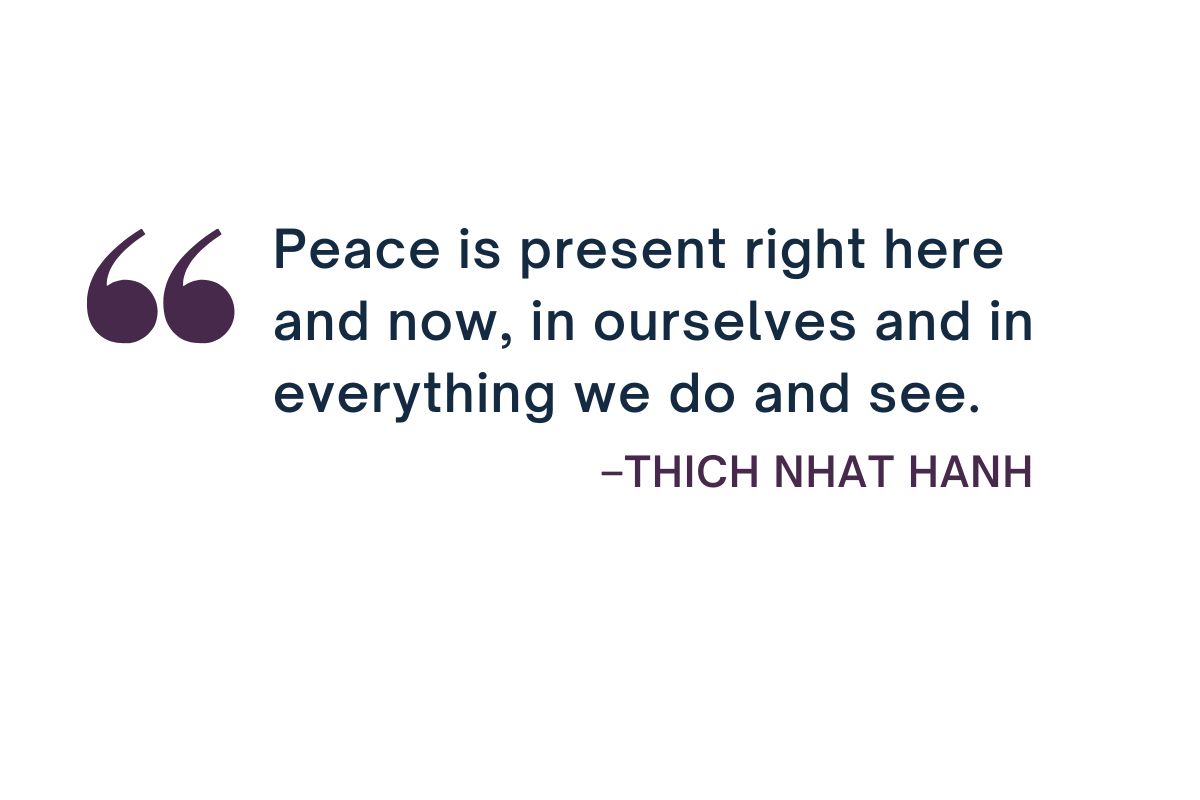
Returning to Thich Nhat Hanh’s insight means recognizing that no amount of curated gear can carry me to the peace that is available right now.
Finding presence by letting go of the endless pursuit
“Happiness slips from our grasp as we chase other things.” Restating Thich Nhat Hanh’s observation brings me back to the core realization I spent years trying to shop my way around: beneath every updated wishlist and unopened box lies the present moment we continuously postpone.

FREE mindfulness resources for stress relief
True contentment doesn’t arrive after reaching a fully curated version of life. By stepping off the familiar route of acquiring more stuff, we give ourselves permission to stop looking so far ahead and finally notice that everything we need to feel genuinely alive is already here.

I’m a freelance writer, mindfulness advocate, and editor of MindfulSpot.com. I began meditating in 2014, and in 2017 I launched this website to share what I learn.

Show Your Support by Donating on Patreon
You can support my blog by making a one-time donation on Patreon — here's what you'll get:
- Behind-the-scenes updates
- Access to exclusive articles
- Weekly Zoom meetings and discussions
Choose an amount below and click "Donate."
Donate