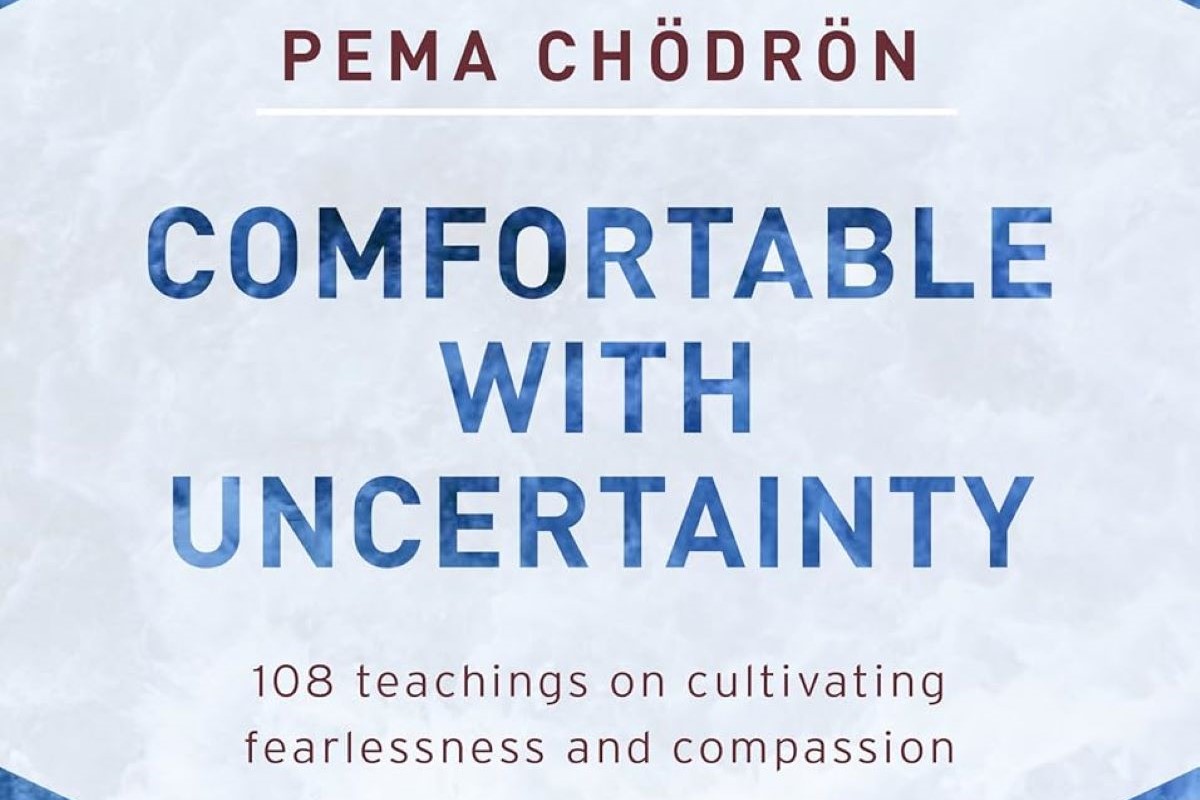

The train car was doing its usual rhythmic swaying, the morning light cutting through the glass in predictable geometric shapes, when I looked down at the dog-eared page of Pema Chodron’s “Taking the Leap: Freeing Ourselves from Old Habits and Fears.”
I was on my way to host my weekly English speaking club, a casual gathering of language learners that I have organized and led every single Sunday for the better part of two years.
My eyes drifted over a specific line, the ink worn from previous readings: “Deep down in the human spirit, there is a reservoir of courage. It is always available, always waiting to be discovered.”
In that cramped space between stations, the words felt like an accusation.
I looked up from the book, suddenly hyper-aware of what my mind had been doing just seconds before. I had been mentally rehearsing my opening lines, anticipating every awkward silence, and trying to settle into exactly the right emotional register before anyone even arrived.
Here I was, reading a profound truth about innate human courage while simultaneously refusing to trust that I possessed any of it for an activity I could practically do in my sleep.
This impulse to keep refining the script before we allow ourselves to simply step into the scene became almost like an invisible habit.
Rehearsing conversations and seeking reassurance before every social moment
It is remarkably easy to camouflage a deep-seated distrust of oneself as mere conscientiousness.
On that commute, as the train rattled onward, I found myself noticing all the absurd ways this distrust slips into my ordinary routines.
I had a note on my phone filled with bullet-pointed conversation starters for the evening—as if a room full of human beings wouldn’t naturally find something to say if left to their own devices.

FREE Self-Test: How Spiritual Are You?
I caught myself scrolling through my past messages to a friend, searching for some subtle confirmation that I hadn’t seemed “low energy” or “off” during our last chat.
This is what a mind does when it believes it cannot trust itself once the curtain rises: it keeps revising the script, convinced one more adjustment will guarantee the scene unfolds exactly as planned.
The true exhaustion of this habit comes from everything that happens before it. I think of the times I have mentally critiqued how I hosted before the participants have even zipped up their coats to leave, or the frantic mid-commute checking of notifications just to reassure myself I was still on the right track.
We subject ourselves to a constant fatigue by staying focused on getting every cue exactly right instead of simply meeting the people in front of us.
We tell ourselves that this relentless rehearsal is just a byproduct of a caring nature or a bit of introverted nervousness. But if I am being honest, it serves a much more stubborn director: the desperate need to control how the audience receives us before the first unscripted moment has even had a chance to happen.
When rehearsing becomes your backstage refuge
We build these internal scripts because trusting ourselves in the unscripted moments feels entirely too exposed. It is a subtle form of self-protection; it feels much safer to translate a vast fear—looking foolish or failing to engage a room—into a series of familiar cues we can rehearse ahead of time.
Every extra revision promises that, if we remember our lines well enough, we won’t have to face the uncertainty of responding to what unfolds. But no amount of rehearsal can replace the confidence that only comes from staying present once the scene begins.
The limits of this habit became painfully clear to me during a session last winter. A quiet participant, someone who rarely spoke, interrupted my carefully planned discussion with a deeply vulnerable question about loneliness. My outline offered no cue for that moment.
The dialogue I had practiced so thoroughly disappeared, and I froze. In that agonizing silence, I realized how completely I had come to depend on staying inside the script instead of learning to trust myself when the conversation inevitably wandered beyond it.
It was a stark reminder that rehearsing every possibility only postpones the moment we discover we are capable of improvising after all.
When rehearsal starts to feel like progress
There is a deceptive comfort in endless rehearsal. Refining the discussion prompts for the third time and analyzing exactly why last week’s transition felt slightly forced—all of it carries the satisfying feeling that something important is happening.
It feels productive.
But if I look closer at those hours spent hovering over my notebook before the club starts, I can see them for what they truly are: an elaborate dress rehearsal that never quite gives way to the real event.
This is the “almost ready to participate” trap, and it is an incredibly lonely place to inhabit. We tell ourselves that once we reach a certain baseline, then we will finally stop rehearsing and fully enter the moment.
But each additional revision only delays our entrance a little longer, consuming enormous amounts of emotional energy while keeping us from the unpredictable exchange unfolding right in front of us.
Eventually, the habit becomes so practiced that we barely notice it anymore. We grow skilled at preparing for connection while rarely allowing ourselves to simply be inside it.
Mastering every detail but feeling nothing at all
There is a hollow precision that comes with mastering every part of an interaction. By all external metrics, my English club sessions were succeeding beautifully.
The transitions between topics were seamless and the prompts were clever enough to spark immediate dialogue. Yet, more often than I cared to admit, I would drive home afterward feeling entirely empty, as if I had spent the whole evening delivering my lines instead of truly sharing the room with everyone in it.
This is the hidden cost of always staying inside the script: it smooths away uncertainty, but it also mutes the moments that make an interaction feel alive. The conversations we remember most are almost never the ones that unfold exactly as expected.
They begin with a learner’s unexpected misuse of a word that opens an entirely new meaning, or an awkward pause that slowly dissolves into unprompted laughter.
Those moments cannot be rehearsed.
They only appear when we stop trying to anticipate every exchange and allow ourselves to respond to what is actually happening.
Otherwise, we may leave having executed every cue beautifully while missing the magic that only emerges when no one is following the script.
Using preparation to serve you, not delay you
The point of this realization isn’t that I show up completely empty-handed and hope for the best. That would be a different kind of avoidance disguised as spontaneity.
The real work lies in changing my relationship with preparation itself, shifting it from something I cling to into something that supports me before I step into the room.
I have to ask myself some uncomfortable questions before everyone arrives.
Is this particular script helping me become more present with these people, or is it simply helping me avoid the discomfort of being seen as imperfect?
Healthy preparation should resemble a rehearsal that knows when to end. Its purpose is to make it easier to trust yourself once the conversation begins to take on a life of its own.
When I can recognize that difference, my pre-session ritual becomes a reminder that I only need enough preparation to stop thinking about the script and start paying attention to the people standing in front of me.
Stop rehearsing and start interacting
As the train finally slowed to a stop at my station, I closed the book and slid it into my bag, Pema Chodron’s words still echoing in the quiet spaces of my mind: “Deep down in the human spirit, there is a reservoir of courage. It is always available, always waiting to be discovered.”
Walking up the concrete steps into the brisk morning air, the weight of that realization settled over me.
For months, I had been treating courage as something that would finally appear once I had rehearsed enough, polished enough, and prepared enough. But the truth is far simpler. Courage is already there, asking us to stop revising long enough to step into the moment as it is.
When I walked into the room for the English club that evening, I left my bulleted list of prompts inside my bag. There was a flare of the familiar panic, the urgent voice insisting I needed another plan in case the conversation stalled.
But as the participants began to trickle in, pulling out chairs and greeting one another in their beautifully fragmented English, I chose to remain with the uncertainty instead.
This shifts everything. It means we can stop waiting for some future version of ourselves who finally feels completely fearless and perfectly prepared before joining in.

FREE mindfulness resources for stress relief
We can spend our whole lives rehearsing for conversations that never unfold exactly as imagined, or we can trust ourselves enough to let the script fall away and finally participate.

I’m a freelance writer and mindfulness advocate behind this blog. I started my meditation practice in 2014, and in 2017 I launched this website to share what I learn with others.

Show Your Support by Donating on Patreon
You can support my blog by making a one-time donation on Patreon — here's what you'll get:
- Behind-the-scenes updates
- Access to exclusive articles
- Weekly Zoom meetings and discussions
Choose an amount below and click "Donate."
Donate