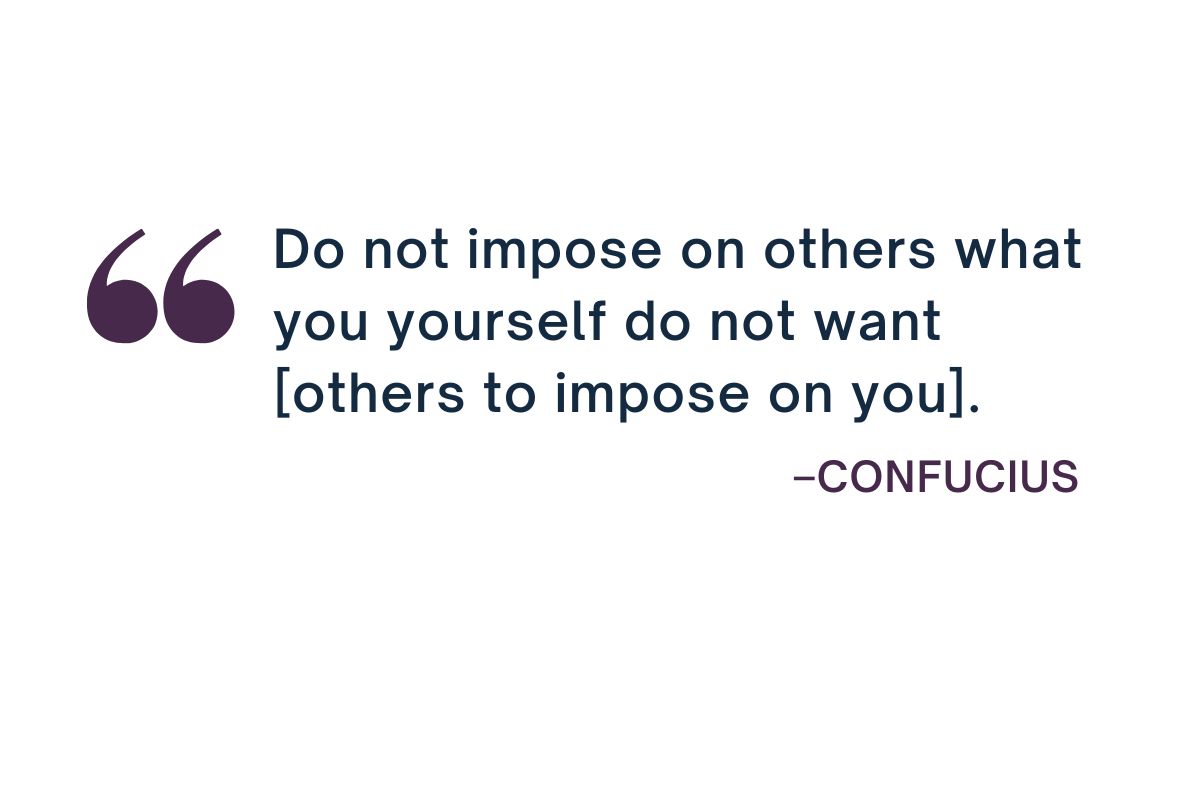

Why is it that we treat our slip-ups like wrong turns we need to hide, rather than information that can help us get back on course? When we mess up, our modern world so often tells us to pretend we are still headed in the right direction.
But the ancient wisdom attributed to Confucius cuts straight through that confusion: “To make a mistake and not to correct it — now that is called making a mistake.” It invites us to pause and ask a challenging question: When was the last time I realized I had taken a wrong turn and still did nothing to change course?
Why we freeze after a mistake
When we make a mess of things, a strange kind of paralysis usually sets in. We might slide into denial or hope the whole situation will somehow disappear if we stay still long enough.
It’s an anxious state of losing our bearings—we spend hours lying awake late into the night, mentally revising a self-exonerating explanation, yet we do nothing to change our direction. We confuse the restless effort of going over the same ground with the real work of getting back on track.
I remember this feeling so vividly from not so distant past. I had promised to write a short article for a local non-profit organization that I truly cared about.
Life got busy, and I missed the deadline. But instead of reaching out to apologize and send it late, I froze. I did nothing. I let weeks pass in silence, mistaking “waiting it out” for “managing the situation.”

FREE Self-Test: How Spiritual Are You?
I was really just allowing a small wrong turn to carry me farther from the trust I had built with them. True action is about taking just one concrete step toward correcting your course.
What makes this difficult is that our minds often treat changing direction as an admission of failure. We want to believe that the path we’ve already chosen must still be the right one, even when the evidence in front of us says otherwise.
That was the lesson hidden inside my missed deadline. The longer I stayed silent, the farther I moved from the simple solution that had been available from the beginning.
I needed to acknowledge the wrong turn and take the next step back toward the person I had let down. Once I understood that, the situation became much less complicated. I couldn’t change where I had been, but I could decide where to go from there.
Everyday corrections you already do without thinking
Think about how naturally we correct our course in ordinary life without an ounce of shame. If you taste a soup you’re cooking and realize it’s bland, you simply reach for the salt. When your shoelace comes undone, you tie it again and continue on your way. Correcting a mistake is just a natural adjustment when you notice you’ve started to drift.
In fact, think of it like your body’s own sense of direction. When you trip on an uneven sidewalk, your inner ear and your muscles instantly fire in a reflex to catch you.
Your body simply adjusts and brings you back into alignment. Our minds can learn to do the exact same thing.
Hiding vs. fixing
There is a massive difference between reacting to a mistake and proactively correcting your course.
When we are caught in a reactive loop, we spend all our energy frantically scrubbing the shared document history and typing out elaborate explanations for the delay just to save face.
But proactive correction is about sitting across from the person you let down and retracing the step that led you there so you can work together on getting things back on track.
I learned the beauty of this distinction when I was young. I had forgotten to go to a close friend’s birthday party, and the guilt was eating me alive.
Instead of making up an elaborate excuse, I just called them and asked if we could hang out the next day. The moment the words left my mouth, I felt lighter.
That lesson completely reshaped how I handle slip-ups; it taught me that the sooner we stop avoiding where we’ve gone off course and take the first step toward setting things right, the sooner we can move forward again.
Four tiny correction habits you can use daily
By building low-friction habits into our daily routines, we can notice when we’ve started to drift before a small deviation turns into a much larger detour. Here are four simple protocols I use every day to keep things moving in the right direction:
- The Same-Day Fix Rule: It doesn’t have to be a complete resolution—just tapping out a brief, three-line message from your phone before setting it on the nightstand to make sure you correct your course before tomorrow.
- The two-sentence template: For low-stakes errors, I avoid defensive explanations and stick to a simple script: “I got this wrong, and I’m sorry about that. Here is what I am doing right now to fix it.” It takes the drama out of the mistake and focuses entirely on the next step.
- The daily mistake scan: Every afternoon, I take just two minutes to review my day and ask myself: What did I get a little wrong today that I can steer back in the right direction?
- The physical reset: Whenever I feel that familiar shame-freeze cycle starting to creep in after an error, I physically move my body. I stand up, stretch, or take a step sideways. Changing my physical posture helps break the mental paralysis and reminds me that I am not stuck where I am; I can still change direction.
What correcting your mistakes does to your brain and your relationships
When you choose to step up and correct your mistakes, something beautiful happens inside your mind. The shame of leaving a wreckage in your wake—along with the exhausting vigilance required to keep anyone from noticing it—begins to fade away. Your brain relaxes because it no longer has to keep track of a complicated cover-up or monitor whether you’ve been discovered.
This shift creates a ripple effect in your relationships, too. Paradoxically, a person who reliably corrects their mistakes, becomes the most dependable friend you could ask for.
When people see that you aren’t afraid to acknowledge when you’ve drifted off course, they stop worrying about your perfection. They learn that your errors may send you in the wrong direction, but your willingness to adjust your course is what makes you someone they can continue moving forward with.
A small challenge to correct one small mistake today
We are often told by the world around us to never show weakness, as if pretending to be perfect is the only way to earn respect. But what if recognizing when we’ve gone off course is where our real strength lives?

FREE mindfulness resources for stress relief
Let’s test this right now with a tiny challenge: think of one small slip-up from today or yesterday, and take one immediate action to correct your course. Make the turn that brings you back toward where you intended to go.

I’m a freelance writer and mindfulness advocate behind this blog. I started my meditation practice in 2014, and in 2017 I launched this website to share what I learn with others.

Show Your Support by Donating on Patreon
You can support my blog by making a one-time donation on Patreon — here's what you'll get:
- Behind-the-scenes updates
- Access to exclusive articles
- Weekly Zoom meetings and discussions
Choose an amount below and click "Donate."
Donate